The proposed scheme is an electrolytic hydrogen to green ammonia production facility, on land adjacent to the disused Scatsta Airport.
Statkraft, Europe’s largest generator of renewable energy, is to take forward plans for its Shetland Hydrogen Project 2, after agreeing a lease on a site owned by Shetland Islands Council.
The proposed scheme is an electrolytic hydrogen to green ammonia production facility of up to 400MW, on land adjacent to the disused Scatsta Airport which is near the existing Sullom Voe Oil Terminal and Shetland Gas Plant.
The green ammonia produced will be used by a wide range of industries, including as a sustainable fuel for marine shipping and to decarbonise fertiliser production, and in doing so contribute significantly to the UK’s industrial decarbonisation goals.
The construction of schemes like Shetland Hydrogen Project 2 will allow excess renewable power that cannot be utilised by the grid to be transformed into hydrogen. Statkraft has three wind farms on Shetland in pre-construction, Mossy Hill near Lerwick, and Energy Isles and Beaw Field on Yell.
Stuart Marley, Statkraft’s Principal Hydrogen Project Manager, said: “This is an exciting milestone for the potential to develop green hydrogen and ammonia production in Shetland. This scheme offers an opportunity to combine Shetland’s renewable resources with innovative technology. The historic links with energy production mean there is a wealth of talent in the region to draw on to ensure projects are run safely and efficiently. While we are currently in the early stages of development, we will work closely with local stakeholders and the wider Shetland community, as we progress this project.”
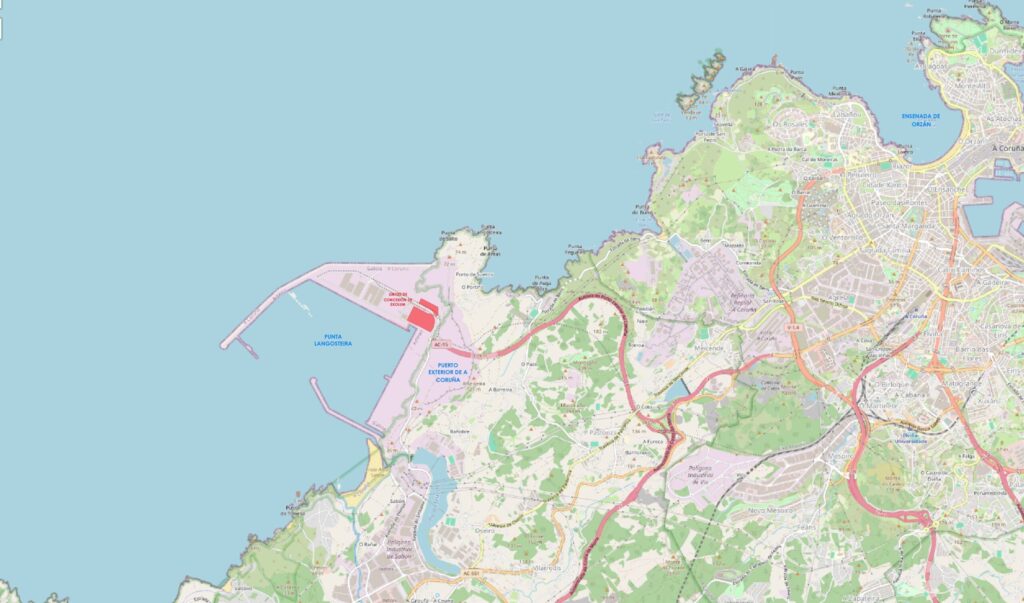
Exolum has embarked upon the process for authorisation for the construction of a new terminal for storage of bulk liquid at the Outer Port of A Coruña, on the Punta Langosteira dock. This project, which would constitute an investment of over €100 million, is framed within the company’s strategy to lead the energy transition in Spain and Europe, by driving infrastructure adapted to new energy vectors.
The project is conceived as an energy transition terminal, designed to progressively adapt to market developments, regulation and industrial demand, and will be equipped to operate with both conventional products and sustainable fuels, such as renewable ammonia, captured CO₂, green methanol, SAF (Sustainable Aviation Fuel), and other biofuels.
The plans incorporate the development of a plant designed under strict criteria of safety, energy efficiency, automation and environmental sustainability. It will be distributed across two separate but connected sites, with a total capacity of approximately 165,000 m3 across 22 tanks (atmospheric, cryogenic, and pressurised) equipped to store hydrocarbons, chemical products, ammonia, and CO2.
The proposal would include an Iberian gauge railway loading bay with a direct connection to the national network, the connection of the terminal to two berths for ships via a network of high-capacity pipes and pumps, and loading islands for tanker trucks, in addition to all auxiliary operating and safety systems.
The planned activities include the storage, blending, and dispatch of a wide range of products, like biodiesel, HVO (hydro biodiesel), bioethanol, methanol, naphtha, SAF, and raw materials for biofuels and traditional hydrocarbons. It also provides for the blending of these products, and multimodal distribution.
In the case of cryogenic CO2, plans provide for reception and storage in pressurised and refrigerated conditions, and dispatch by land and maritime transport, with the possibility of a future connection by pipeline. With regard to ammonia, reception by the same routes is under study, as is the possibility of temporary reception in cryogenic tanks and subsequent distribution by different forms of transport.
This flexible and integrated multimodal logistics infrastructure will facilitate the optimisation of the regional logistics system, improve operating efficiency and guarantee a secure and sustainable energy supply for Galicia and the northwest of the Iberian peninsula. Given the complexity of the planned infrastructure, and the types of products to be stored, a scaled implementation is planned, with operations forecast to begin in 2029.
This future terminal would turn the Port of A Coruña into a leading logistics hub at national and European level, thanks to its strategic location on routes to Northern Europe, America, the south of the continent and the Middle East.
For Jorge Guillén, Aviation & Spain Network Lead, “this initiative reflects Exolum’s firm commitment to the development of new logistics infrastructure in Spain, to tackle the challenges and opportunities of the energy transition. The Outer Port of A Coruña offers exceptional operating conditions, with a privileged location, maritime access and a multimodal connection that makes it the ideal location of projects like this one.
Exolum is confident this installation will contribute to the competitiveness of the industry and the Galician economy, fostering the creation of qualified jobs in the construction and operation phase and attracting industrial investment linked to the decarbonisation of the sector and green molecules.
With this initiative, Exolum reaffirms its commitment to innovation, sustainability and the development of advanced logistics solutions at the service of the energy transition.