MHI Signs EPC Contract for Large-Scale Ammonia and Urea Fertilizer Production Complex for the State Concern Turkmenhimiya

Mitsubishi Heavy Industries, Ltd. (MHI) has signed an EPC (Engineering, Procurement and Construction) contract with SC Turkmenhimiya, the state-owned chemical company of Turkmenistan, for the construction of a large-scale ammonia and urea fertilizer production complex. The contract was concluded in partnership with Gap Insaat Yatirim ve Dis Ticaret A.S. (GAP), a leading Turkish contractor.

The groundbreaking ceremony was held on November 2, 2025, attended by the President of Turkmenistan, His Excellency Serdar Berdimuhamedov. The plant is scheduled to begin operations in 2030.

The project involves the construction of the largest ammonia and urea fertilizer production plant in Turkmenistan. Located on the coastline of the Caspian Sea at Kiyanly in the Balkan province in northwestern Turkmenistan, the project covers basic and detailed design, equipment procurement, construction works, and commissioning of the plant. In addition to the ammonia and urea fertilizer production plant with its associated utilities and offsite facilities, the scope also includes peripheral infrastructure such as temporary piers and product shipment facilities. The planned daily production capacity is 2,000 metric tons of ammonia and 3,500 metric tons of urea. MHI will be responsible for the basic and detailed design, procurement, and commissioning of the ammonia and urea fertilizer plant, and will collaborate closely with GAP and Mitsubishi Corporation to execute the project.

Turkmenistan is one of the world’s leading countries in natural gas reserves and has prioritized the production of high value-added products using its abundant natural resources and the diversification of export products as key pillars of its national strategy. The fertilizers produced at this plant are expected to greatly contribute to the country’s economic growth and enhancement of international competitiveness. Additionally, the plant will be equipped with a CO2 capture facility applying MHI’s proprietary “Advanced KM CDR Process™”, developed jointly with Kansai Electric Power Co., Inc. This facility will improve plant efficiency and reduce environmental impact, thereby contributing to the realization of a sustainable society.

MHI has delivered numerous fertilizer production facilities worldwide since its first plant in 1958. In Turkmenistan, MHI delivered a plant in Garabogaz on the Caspian Sea coast in 2018 in partnership with Mitsubishi Corporation and GAP. This plant has maintained stable operations since its commissioning. This contract award is based on that proven track record as well as a high evaluation of MHI’s CO2 capture technology.

MHI will continue to strengthen its presence in the global fertilizer plant market and contribute to the world by providing safe and reliable production facilities.

Source article: Mitsubishi Heavy Industries

New business alliance launches to maximise benefits of low-carbon ammonia for UK energy security and growth

Members Logos for UK Ammonia Alliance

  • UK Ammonia Alliance (UKAA) is a new coalition of pioneering businesses that has launched to accelerate the growth of the UK’s ammonia industry. It aims to drive adoption of low-carbon ammonia across industry, energy, agriculture and transport to support the UK’s energy security, decarbonisation and economic growth. 
  • With its world-class research and innovation base, industrial expertise, and location as an import/export hub, the UK is well-positioned to lead the global transition to low-carbon ammonia.
  • Ammonia is a gas vital for modern life, widely used in fertilisers and industrial applications. When produced with renewable energy or carbon capture and storage, low-carbon ammonia can provide a route to decarbonise hard-to-abate sectors and accelerate the energy transition as an efficient hydrogen carrier, energy store, and sustainable fuel.
  • UKAA is calling for supportive UK Government policy to ensure the UK captures the full economic, energy security and decarbonisation benefits of this growing market.
  • The Alliance will hold its first public event in Parliament next month with MPs and Peers, where it will launch a policy paper setting out key steps to unlocking the UK’s ammonia opportunity.

A group of leading businesses from across the ammonia value chain have come together to form the UK Ammonia Alliance – a coalition working together to maximise the role of ammonia in delivering a more secure, sustainable future for the UK.

The Alliance will draw on their deep expertise and innovation across the ammonia, energy and hydrogen industries. The Founding Members of the UKAA are AFC Energy, Air Products, Blended Products, Clean Air Power, Exolum, Green Cat Hydrogen, HYCAP, Industrial Chemicals Limited, Mitsubishi Heavy Industries, N-Gen Energy and Statkraft.

Essential for modern agriculture and industry, ammonia has long been used in fertilisers, refrigeration and manufacturing. Today, low-carbon ammonia offers a pathway to decarbonise these vital sectors while also being used in new applications including hydrogen transport and storage, power generation and sustainable fuels.

The UK Ammonia Alliance seeks to help industries adopt these solutions-at scale, to support the UK Government in unlocking the strategic role that low-carbon ammonia can play in delivering net zero, energy security and economic growth.

Dr Mike Rendall, CTO of AFC Energy and Chair of UKAA, said:

“Ammonia represents a major opportunity for the UK to accelerate the energy transition while driving industrial growth.

The work we are doing at AFC Energy shows that low carbon ammonia imports will play a vital role in making hydrogen accessible across the UK.  By using our compact, decentralised ammonia crackers and ammonia-to-power systems, we plan to supply hydrogen and clean power at scale for industry and transport applications. Crucially, this can be delivered at a commercially viable price point, and without the need for government subsidies.

“As the Alliance’s first Chair, I’m looking forward to building a unified industry voice to help channel the UK’s innovation and expertise into good jobs, clean energy and food security for people across the UK.”

The launch of the UK Ammonia Alliance has been welcomed by multinational ammonia trade groups:

Trevor Brown, Executive Director of the Ammonia Energy Association said:

“The Ammonia Energy Association welcomes the establishment of the UK Ammonia Alliance. At the AEA, we are committed to accelerating the responsible adoption of clean ammonia by promoting cross-sectoral collaboration, knowledge sharing, global standards, and supportive policies. Critical to achieving this is strong international collaboration across industry, policymakers and investors.

“The UK has world-class R&D capabilities and industrial expertise, and it offers a strategic location as an import/export hub. For these reasons we look forward to sharing our global knowledge and expertise, and working together with the UKAA to support the growth of the clean ammonia market in the UK.”

Stephen Jackson, CEO of Ammonia Europe said:

“I welcome the launch of the UK Ammonia Alliance. It’s great to see this national initiative take shape, which will be a strong complement to Ammonia Europe’s work to decarbonise the European ammonia industry and drive uptake of clean ammonia.

“International collaboration is going to be key as governments, industry and investors work to deliver the energy transition. We look forward to working closely with the UKAA in pursuit of our shared vision for a secure, resilient and sustainable future.”

The Alliance believes that the UK has a strategic opportunity to capture a significant share of the growing global ammonia market. According to the International Energy Agency (IEA), ammonia production is projected to rise by almost 40% by 2050*.

Ammonia has been widely and safely traded for decades, as the second most produced chemical commodity. This means there are established supply chains, transport vessels, handling procedures, distributors and storage terminals across the world.

The UKAA aims to work with industry and Government to support the policies, investment and infrastructure needed to scale low-carbon ammonia adoption. By building on the UK’s industrial strengths, the Alliance’s ambition is to unlock new opportunities for growth, innovation, and energy and food security — cementing the UK’s leadership in the global transition to a net zero economy.

As its first major public intervention, the UKAA will launch a policy paper in Parliament in November. This paper will set out the Alliance’s key recommendations for the UK to capture the significant economic and decarbonisation opportunities from low-carbon ammonia.

Matt Kelly, Vice President Hydrogen UK at Statkraft said:

“Green hydrogen and green ammonia will play a unique role in the energy transition, offering a low-carbon alternative for some of the most difficult sectors to electrify. Statkraft is focused on developing our ammonia projects in Great Britain and are pleased to be advancing this mission along with partners in the UKAA.”

Alex Robinson, Managing Director at Blended Products said:

“As the UK’s largest independent supplier of ammonia and supported products, Blended Products understands the importance of building a resilient domestic supply chain. Low-carbon ammonia presents a major opportunity to strengthen UK industry, create skilled jobs and improve energy security. The UK Ammonia Alliance gives us a strong platform to turn this potential into reality.”

Stephen Livermore, Development Manager at Green Cat Hydrogen said:

“The Green Cat Group has 20 years of experience in renewable energy development. Green Cat Hydrogen is a recent addition to the group, aimed at facilitating the energy transition including decarbonising industry and helping to reconcile challenges with the grid that have been hampering renewable development. We see ammonia as a key vector for decarbonisation and are pleased to join a coalition that is offering practical solutions to realise this potential.”

Edward Gill, NWE Public Affairs Lead at Exolum said:

“Exolum’s expertise in connecting global sustainable fuel markets can help provide the critical logistics infrastructure that’s needed to support ammonia’s role in the UK’s energy transition. We’re delighted to be joining with like-minded colleagues to form the UK Ammonia Alliance as part of that.”

Dr Dan Skelton, Managing Director at Clean Air Power said:

“We see ammonia as a vital clean fuel for the future, one capable of transforming sectors that are hard to electrify. Through our advanced injector technology, we and our partners see ammonia as a key enabler for the replacement of fossil fuels across flexible power generation, data centre resilience, distributed energy networks, industrial and marine applications. We’re proud to contribute our expertise to help the Alliance accelerate this transition to a zero-carbon energy future.”

Ben Madden, Chief Technology Officer at HYCAP said:

“With our focus on investing in the energy transition, HYCAP believes in the transformative potential of low-carbon ammonia. HYCAP is proud to support the Alliance in unlocking growth and deploying innovation across the sector.”

Gareth Mills, Managing Director at N-Gen Energy said:

“We recognise that ammonia can accelerate the deployment of clean hydrogen, boost our energy security and drive industry towards decarbonisation. By working as part of the Alliance, we can ensure the UK reaps the economic benefits of becoming a global frontrunner in ammonia adoption.” 

John Wilson, CEO of AFC Energy said:

“We applaud the launch of the UK Ammonia Alliance and believe this represents a major step forward in building a cleaner, more resilient energy future. AFC’s ammonia cracking technology is on the front line of many exciting low carbon ammonia projects across the world, and we look forward to sharing our insights and expertise with Government and industry colleagues.”

Darren Sharpe, Energy Projects Manager at Industrial Chemicals Group said:

“This collaboration, bringing together industry experts, investors and innovators, is a really important step to realising ammonia’s full potential. As one of the UK’s largest chemical distributors, we see a huge opportunity for the UK to become a world leader in the growing global market for ammonia solutions.”

Kentaro Noguchi, Head of Strategy at Mitsubishi Heavy Industries EMEA said:

“Mitsubishi Heavy Industries is committed to developing decarbonisation technologies and supporting the development of value chains that enable the use of ammonia as a clean fuel, which holds the key to solutions in the energy transition. With our ammonia-to-power technology, we hope to contribute to the Alliance’s mission of advancing a low-carbon ammonia economy in the UK.”

For further information, please contact secretariat@ukammoniaalliance.co.uk.

*International Energy Association Ammonia Technology Roadmap Executive Summary

ENDS

New Joint Venture with Industrial Chemicals Group and AFC Energy to produce hydrogen from ammonia

AFC logo

AFC Energy plc (AIM: AFC) (“AFC Energy”), a leading provider of hydrogen powered generator technologies, and Industrial Chemicals Group Limited (“ICL”), one of the UK’s largest independent chemical manufacturing and distribution companies, are pleased to announce their agreement to form a joint venture (“JV”) to produce hydrogen from ammonia.

Read the full press release: londonstockexchange.com


Blended Products launches Aquamonia 245 to support pharmaceutical manufacturing

Blended

Supporting Pharmaceutical manufacturing with high-purity Aqueous Ammonia

The pharmaceutical industry demands precision, consistency, and compliance at every stage of production. From raw material selection to final formulation, manufacturers rely on carefully controlled processes to deliver safe and effective products. One of the important reagents in this process is aqueous ammonia, which plays a key role in synthesis, pH control, and formulation.

Blended Products has launched Aquamonia 245, a 24.5% high-purity aqueous ammonia solution developed to meet the needs of pharmaceutical manufacturing. Available in 25-litre, 220-litre, and 1000-litre IBC formats, Aquamonia 245 offers flexibility for laboratories, pilot plants, and large-scale manufacturing facilities.

Why Aqueous Ammonia is vital in Pharmaceuticals

Aqueous ammonia is widely used in the pharmaceutical sector for:

  • Synthesis and reactions – As a reagent in the preparation of active pharmaceutical ingredients (APIs) and intermediates.
  • pH Control – To neutralise acids or maintain stability during formulation.
  • Cleaning and sterilisation – For use in cleaning solutions, ensuring hygienic manufacturing environments.

The consistent concentration and purity of Aquamonia 245 ensures reproducibility – a critical factor when working within a tightly regulated sector where batch-to-batch consistency is non-negotiable.

Confidence in quality and compliance

Blended Products understands that pharmaceutical manufacturers require more than just supply – they need documentation, traceability, and technical assurance. Aquamonia 245 is supplied with full Safety Data Sheets (SDS) and batch certification to support compliance with industry standards.

With UK-based supply and distribution, Blended Products ensures dependable delivery schedules to minimise production downtime. Our technical team is also available to advise on safe handling, storage, and integration into existing processes.

Partnering with Pharma

Aquamonia 245 is more than just a chemical supply – it’s a solution designed to help pharmaceutical companies streamline production, maintain regulatory compliance, and achieve consistent results.

If you are part of the pharmaceutical sector and looking for a reliable partner to supply aqueous ammonia, Blended Products is ready to support you.

Source Artcle: blendedproducts.com/


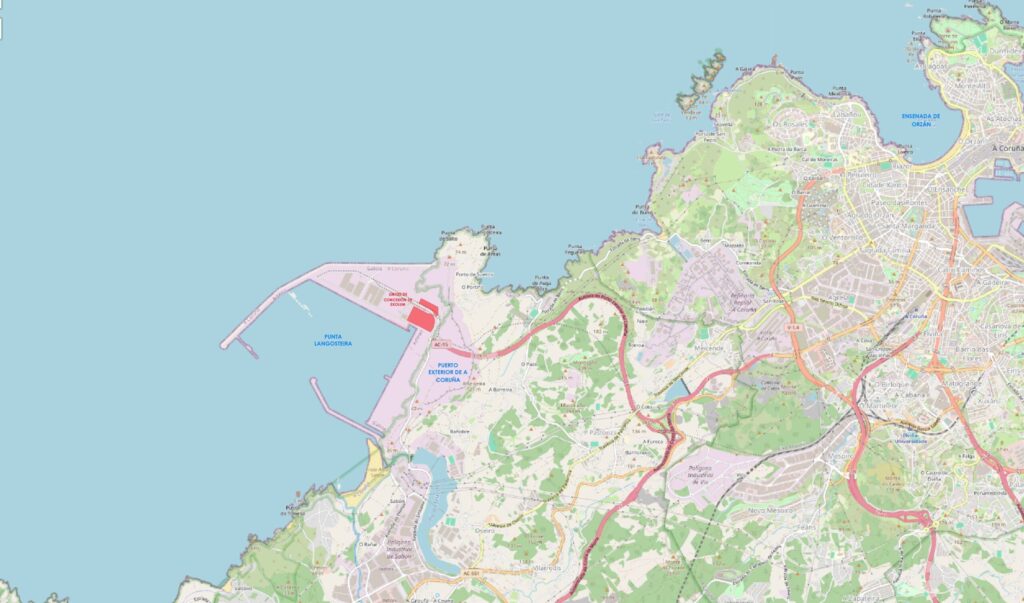
Exolum planning construction of new energy transition terminal at the Outer Port of A Coruña with investment of over €100 million

Exolum planning construction of new energy transition terminal at the Outer Port of A Coruña with investment of over €100 million

Exolum has embarked upon the process for authorisation for the construction of a new terminal for storage of bulk liquid at the Outer Port of A Coruña, on the Punta Langosteira dock. This project, which would constitute an investment of over €100 million, is framed within the company’s strategy to lead the energy transition in Spain and Europe, by driving infrastructure adapted to new energy vectors.

The project is conceived as an energy transition terminal, designed to progressively adapt to market developments, regulation and industrial demand, and will be equipped to operate with both conventional products and sustainable fuels, such as renewable ammonia, captured CO₂, green methanol, SAF (Sustainable Aviation Fuel), and other biofuels.

The plans incorporate the development of a plant designed under strict criteria of safety, energy efficiency, automation and environmental sustainability. It will be distributed across two separate but connected sites, with a total capacity of approximately 165,000 m3 across 22 tanks (atmospheric, cryogenic, and pressurised) equipped to store hydrocarbons, chemical products, ammonia, and CO2.

The proposal would include an Iberian gauge railway loading bay with a direct connection to the national network, the connection of the terminal to two berths for ships via a network of high-capacity pipes and pumps, and loading islands for tanker trucks, in addition to all auxiliary operating and safety systems.

The planned activities include the storage, blending, and dispatch of a wide range of products, like biodiesel, HVO (hydro biodiesel), bioethanol, methanol, naphtha, SAF, and raw materials for biofuels and traditional hydrocarbons. It also provides for the blending of these products, and multimodal distribution.

In the case of cryogenic CO2, plans provide for reception and storage in pressurised and refrigerated conditions, and dispatch by land and maritime transport, with the possibility of a future connection by pipeline. With regard to ammonia, reception by the same routes is under study, as is the possibility of temporary reception in cryogenic tanks and subsequent distribution by different forms of transport.

This flexible and integrated multimodal logistics infrastructure will facilitate the optimisation of the regional logistics system, improve operating efficiency and guarantee a secure and sustainable energy supply for Galicia and the northwest of the Iberian peninsula. Given the complexity of the planned infrastructure, and the types of products to be stored, a scaled implementation is planned, with operations forecast to begin in 2029.

This future terminal would turn the Port of A Coruña into a leading logistics hub at national and European level, thanks to its strategic location on routes to Northern Europe, America, the south of the continent and the Middle East.

For Jorge Guillén, Aviation & Spain Network Lead, “this initiative reflects Exolum’s firm commitment to the development of new logistics infrastructure in Spain, to tackle the challenges and opportunities of the energy transition. The Outer Port of A Coruña offers exceptional operating conditions, with a privileged location, maritime access and a multimodal connection that makes it the ideal location of projects like this one.

Exolum is confident this installation will contribute to the competitiveness of the industry and the Galician economy, fostering the creation of qualified jobs in the construction and operation phase and attracting industrial investment linked to the decarbonisation of the sector and green molecules.

With this initiative, Exolum reaffirms its commitment to innovation, sustainability and the development of advanced logistics solutions at the service of the energy transition.

Source article: Exolum