MHI Successfully Produces Hydrogen at Its Ammonia Cracking Pilot Plant Using Steam Heating

Pilot Plant for the Ammonia Cracking System

Mitsubishi Heavy Industries, Ltd. (MHI), as part of its effort to develop an innovative ammonia cracking system, has succeeded in producing 99% pure hydrogen by cracking ammonia using steam as the heating source. The production of hydrogen at pilot scale using the steam heating was conducted at the company’s pilot plant in the Nagasaki District Research & Innovation Center, marking a world first.

In contrast to conventional technologies that utilize heat from burner combustion, MHI’s steam heating system operates at lower reaction temperatures, reducing operating costs. In addition, because a combustion furnace is not required, the system offers excellent features such as the potential for miniaturization.

The utilization of hydrogen, a fuel that does not emit CO2 even when combusted, is expanding worldwide as a means of achieving a decarbonized society. Ammonia in particular is attracting attention as a “hydrogen carrier” to store and transport hydrogen over long distances safely and in large quantities.

MHI, with the aim of building a hydrogen supply chain using ammonia as a hydrogen carrier, will build on this achievement to promote the development of medium-scale, decentralized ammonia cracking systems near hydrogen demand sites. Based on the results of this pilot test, MHI, in collaboration with project partners Nippon Shokubai Co., Ltd. and Hokkaido Electric Power Co., Inc., will accelerate the development of this technology, which was selected by Japan’s New Energy and Industrial Technology Development Organization (NEDO) for its “Development of Technologies for Building a Competitive Hydrogen Supply Chain” project. Through these efforts, MHI will strive to establish and implement decarbonization technologies as soon as possible, and contribute to the realization of a sustainable, carbon-neutral world.

Source article: Mitsubishi Heavy Industries


About MHI Group

Mitsubishi Heavy Industries (MHI) Group is one of the world’s leading industrial groups, spanning energy, smart infrastructure, industrial machinery, aerospace and defense. MHI Group combines cutting-edge technology with deep experience to deliver innovative, integrated solutions that help to realize a carbon neutral world, improve the quality of life and ensure a safer world. For more information, please visit www.mhi.com.

Air Products and Yara in Advanced Negotiations to Partner on Low-emission Ammonia Projects

Air Products and Yara in Advanced Negotiations to Partner on Low-emission Ammonia Projects

Plans connect Air Products’ low-emission ammonia projects in the U.S. and Saudi Arabia with Yara’s world-scale ammonia network.

  • Final Investment Decisions by both companies for the U.S. project (Louisiana Clean Energy Complex) are targeted by mid-2026, subject to, among other things, air permit issuance and finalization of construction contracts; and
  • Final marketing and distribution agreement for renewable ammonia from the Saudi Arabian project (NEOM Green Hydrogen Project) is targeted for the first half of 2026.

World-leading hydrogen supplier and global industrial gases company Air Products and world-leading crop nutrition and ammonia company Yara International ASA are working to combine Air Products’ industrial gas capabilities and low-emission hydrogen with Yara’s ammonia production and distribution network.

Air Products is the project developer and once the ammonia plant has achieved agreed upon performance levels, Yara would acquire the ammonia production, storage and shipping facilities for approximately 25 percent of the total project cost (estimated between $8-9 billion). Yara would assume responsibility for related operations and integrate the entire ammonia output into its global distribution network.

Air Products would own and operate the industrial gases production, where approximately 80% of the low-carbon hydrogen would be supplied to Yara under a 25-year long-term offtake agreement to produce 2.8 million tonnes of low-carbon ammonia per year. The remaining hydrogen would be supplied to Air Products’ customers in the U.S. Gulf Coast via Air Products’ 700-mile hydrogen pipeline system. About five million tonnes per year of high purity CO2 captured by the Air Products facility would be sequestered by a third party under a long-term agreement to be announced later.

Final investment decisions by both companies are targeted by mid-2026, and project completion is expected by 2030.

Air Products and Yara anticipate entering into a marketing and distribution agreement where Yara would commercialize, on a commission basis, the ammonia not sold by Air Products as renewable hydrogen in Europe. The model maximizes value for both companies and enables ammonia from the world’s first large-scale renewable ammonia plant to be delivered worldwide by Yara’s unparalleled shipping fleet. The marketing and distribution agreement is targeted to be completed during the first half of 2026.

Leveraging complementary strengths to drive value creation in low-emission ammonia

Yara is the world’s largest trader and shipper of ammonia, currently transporting over four million metric tonnes annually, which is supported by Yara’s 12 ammonia vessels and 18 import terminals. In addition, Yara has a significant internal ammonia demand. Air Products is the world’s largest supplier of hydrogen and brings leading low-emission hydrogen and ammonia production at scale. The collaboration would enable the companies to meet the increasing demand for low-emission ammonia in the coming years, particularly in Europe both for Yara’s internal consumption and other customers.

“We are pleased to be working with Yara, the world’s leading fertilizer company, as we advance the global low-emission ammonia market and maximize value from our projects in Louisiana and Saudi Arabia,” said Air Products’ Chief Executive Officer Eduardo Menezes.

“Air Products’ two advanced projects are a strong strategic fit with Yara’s flexible nitrogen system – enabling energy diversification and profitable decarbonization while aligning with our disciplined capital allocation policy. The Louisiana project builds on a proven, capital-efficient model; producing ammonia from externally sourced hydrogen and delivering strong returns,” said Yara’s CEO Svein Tore Holsether.

Source article: Yara

Clean Air Power leads consortium for ammonia genset to accelerate sustainable shipping

Clean air power

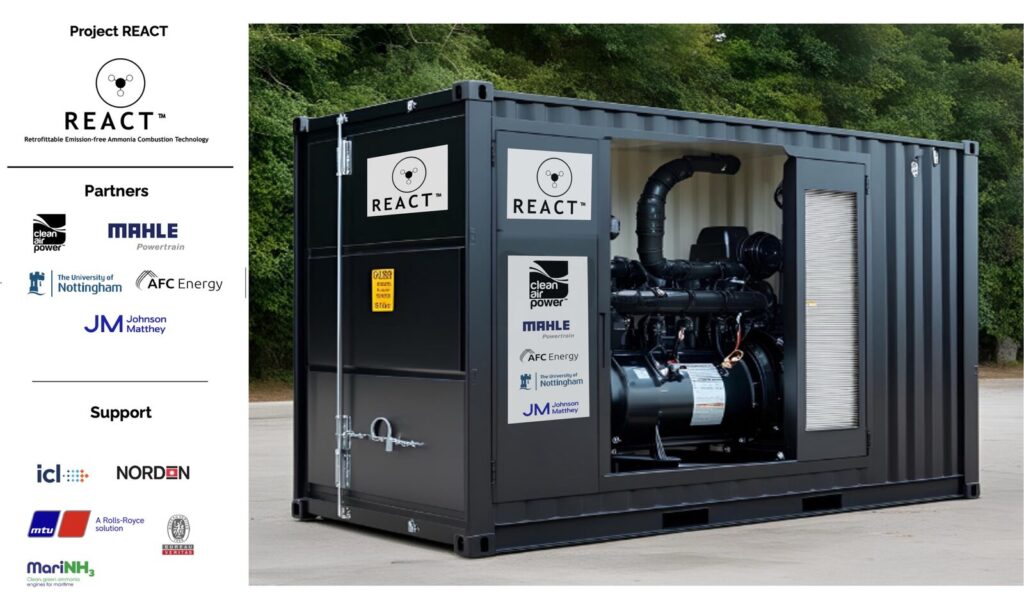
In a significant boost for the UK’s net zero ambitions and leadership in clean maritime technology, a Clean Air Power led collaboration has secured funding under UK SHORE, a UK Department for Transport programme, delivered in partnership with Innovate UK, under the Clean Maritime Demonstration Competition Round 6 (CMDC6). This investment will support Project REACT – a groundbreaking initiative to deliver the world’s first mono-fuelled ammonia generator set retrofit for maritime applications. This underscores ammonia’s valuable role as a hydrogen carrier, offering a practical, viable solution to decarbonise a hard-to-abate sectors including maritime.

Through Project REACT (Retrofittable Emission-Free Ammonia Combustion Technology), the consortium – comprising Clean Air Power, MAHLE Powertrain, Johnson Matthey, AFC Energy, and the University of Nottingham – will conduct pre-deployment trials of a fully decarbonised, containerised ammonia genset, developed as a retrofit solution for existing diesel engines. Driving forward the UK’s position as a global innovator in sustainable shipping, this system offers a scalable route to reduce greenhouse gas emissions from shoreside, auxiliary, and onboard maritime power, with minimal disruption to existing vessel architectures. 

Key project features include:

  • A containerised genset design with onboard fuel handling and safety systems, enabling scalable deployment.
  • A zero-carbon fuel injection system developed by Clean Air Power, for ammonia and hydrogen combustion.
  • Spark ignition engine conversion, combustion system development and fuelling control architecture by MAHLE Powertrain and University of Nottingham.
  • An emissions after-treatment system by Johnson Matthey, designed to meet maritime compliance.
  • An integrated ammonia cracker system by AFC Energy, enabling high-efficiency hydrogen release within the engine exhaust stream.
  • Validation of a novel monofuel engine operating strategy at full system level at the University of Nottingham’s Powertrain Research Centre.

The system will be designed for both portside and vessel-based applications, with a steering group comprising an engine OEM, classification body, and vessel operator helping guide the path to adoption, strengthening the UK’s maritime supply chain.

Source Article: Clean Air Power

New Joint Venture with Industrial Chemicals Group and AFC Energy to produce hydrogen from ammonia

AFC logo

AFC Energy plc (AIM: AFC) (“AFC Energy”), a leading provider of hydrogen powered generator technologies, and Industrial Chemicals Group Limited (“ICL”), one of the UK’s largest independent chemical manufacturing and distribution companies, are pleased to announce their agreement to form a joint venture (“JV”) to produce hydrogen from ammonia.

Read the full press release: londonstockexchange.com


Blended Products launches Aquamonia 245 to support pharmaceutical manufacturing

Blended

Supporting Pharmaceutical manufacturing with high-purity Aqueous Ammonia

The pharmaceutical industry demands precision, consistency, and compliance at every stage of production. From raw material selection to final formulation, manufacturers rely on carefully controlled processes to deliver safe and effective products. One of the important reagents in this process is aqueous ammonia, which plays a key role in synthesis, pH control, and formulation.

Blended Products has launched Aquamonia 245, a 24.5% high-purity aqueous ammonia solution developed to meet the needs of pharmaceutical manufacturing. Available in 25-litre, 220-litre, and 1000-litre IBC formats, Aquamonia 245 offers flexibility for laboratories, pilot plants, and large-scale manufacturing facilities.

Why Aqueous Ammonia is vital in Pharmaceuticals

Aqueous ammonia is widely used in the pharmaceutical sector for:

  • Synthesis and reactions – As a reagent in the preparation of active pharmaceutical ingredients (APIs) and intermediates.
  • pH Control – To neutralise acids or maintain stability during formulation.
  • Cleaning and sterilisation – For use in cleaning solutions, ensuring hygienic manufacturing environments.

The consistent concentration and purity of Aquamonia 245 ensures reproducibility – a critical factor when working within a tightly regulated sector where batch-to-batch consistency is non-negotiable.

Confidence in quality and compliance

Blended Products understands that pharmaceutical manufacturers require more than just supply – they need documentation, traceability, and technical assurance. Aquamonia 245 is supplied with full Safety Data Sheets (SDS) and batch certification to support compliance with industry standards.

With UK-based supply and distribution, Blended Products ensures dependable delivery schedules to minimise production downtime. Our technical team is also available to advise on safe handling, storage, and integration into existing processes.

Partnering with Pharma

Aquamonia 245 is more than just a chemical supply – it’s a solution designed to help pharmaceutical companies streamline production, maintain regulatory compliance, and achieve consistent results.

If you are part of the pharmaceutical sector and looking for a reliable partner to supply aqueous ammonia, Blended Products is ready to support you.

Source Artcle: blendedproducts.com/


Statkraft shares plans for green hydrogen scheme in Shetland

Scatsta

The proposed scheme is an electrolytic hydrogen to green ammonia production facility, on land adjacent to the disused Scatsta Airport.

Statkraft, Europe’s largest generator of renewable energy, is to take forward plans for its Shetland Hydrogen Project 2, after agreeing a lease on a site owned by Shetland Islands Council.

The proposed scheme is an electrolytic hydrogen to green ammonia production facility of up to 400MW, on land adjacent to the disused Scatsta Airport which is near the existing Sullom Voe Oil Terminal and Shetland Gas Plant.

The green ammonia produced will be used by a wide range of industries, including as a sustainable fuel for marine shipping and to decarbonise fertiliser production, and in doing so contribute significantly to the UK’s industrial decarbonisation goals.  

The construction of schemes like Shetland Hydrogen Project 2 will allow excess renewable power that cannot be utilised by the grid to be transformed into hydrogen. Statkraft has three wind farms on Shetland in pre-construction, Mossy Hill near Lerwick, and Energy Isles and Beaw Field on Yell. 

Stuart Marley, Statkraft’s Principal Hydrogen Project Manager, said: “This is an exciting milestone for the potential to develop green hydrogen and ammonia production in Shetland. This scheme offers an opportunity to combine Shetland’s renewable resources with innovative technology. The historic links with energy production mean there is a wealth of talent in the region to draw on to ensure projects are run safely and efficiently. While we are currently in the early stages of development, we will work closely with local stakeholders and the wider Shetland community, as we progress this project.” 


Gary Connor

Senior Media Relations Manager, Statkraft UK

Source Article: statkraft.co.uk


Exolum planning construction of new energy transition terminal at the Outer Port of A Coruña with investment of over €100 million

Exolum planning construction of new energy transition terminal at the Outer Port of A Coruña with investment of over €100 million

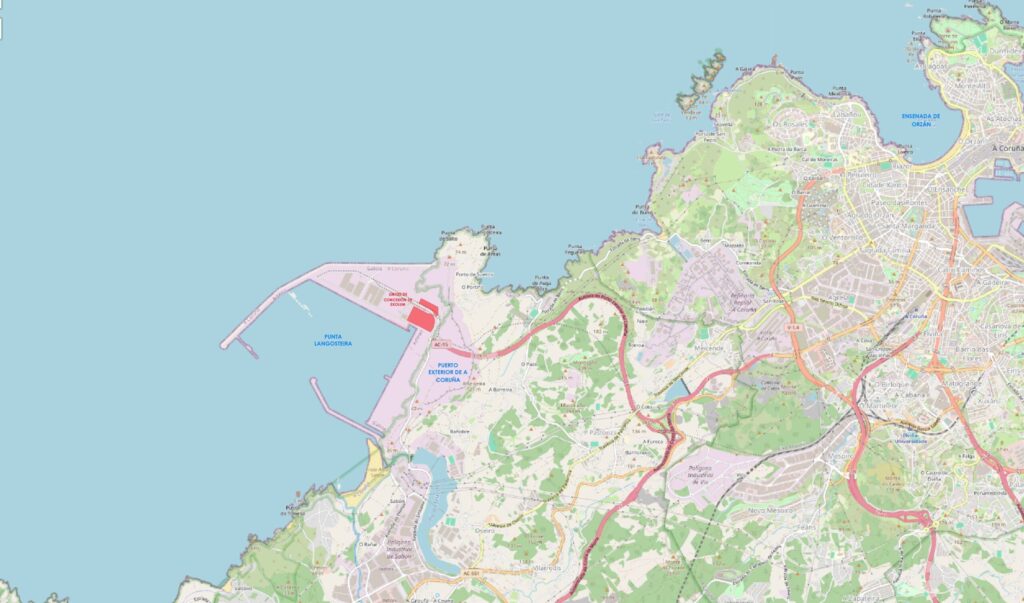
Exolum has embarked upon the process for authorisation for the construction of a new terminal for storage of bulk liquid at the Outer Port of A Coruña, on the Punta Langosteira dock. This project, which would constitute an investment of over €100 million, is framed within the company’s strategy to lead the energy transition in Spain and Europe, by driving infrastructure adapted to new energy vectors.

The project is conceived as an energy transition terminal, designed to progressively adapt to market developments, regulation and industrial demand, and will be equipped to operate with both conventional products and sustainable fuels, such as renewable ammonia, captured CO₂, green methanol, SAF (Sustainable Aviation Fuel), and other biofuels.

The plans incorporate the development of a plant designed under strict criteria of safety, energy efficiency, automation and environmental sustainability. It will be distributed across two separate but connected sites, with a total capacity of approximately 165,000 m3 across 22 tanks (atmospheric, cryogenic, and pressurised) equipped to store hydrocarbons, chemical products, ammonia, and CO2.

The proposal would include an Iberian gauge railway loading bay with a direct connection to the national network, the connection of the terminal to two berths for ships via a network of high-capacity pipes and pumps, and loading islands for tanker trucks, in addition to all auxiliary operating and safety systems.

The planned activities include the storage, blending, and dispatch of a wide range of products, like biodiesel, HVO (hydro biodiesel), bioethanol, methanol, naphtha, SAF, and raw materials for biofuels and traditional hydrocarbons. It also provides for the blending of these products, and multimodal distribution.

In the case of cryogenic CO2, plans provide for reception and storage in pressurised and refrigerated conditions, and dispatch by land and maritime transport, with the possibility of a future connection by pipeline. With regard to ammonia, reception by the same routes is under study, as is the possibility of temporary reception in cryogenic tanks and subsequent distribution by different forms of transport.

This flexible and integrated multimodal logistics infrastructure will facilitate the optimisation of the regional logistics system, improve operating efficiency and guarantee a secure and sustainable energy supply for Galicia and the northwest of the Iberian peninsula. Given the complexity of the planned infrastructure, and the types of products to be stored, a scaled implementation is planned, with operations forecast to begin in 2029.

This future terminal would turn the Port of A Coruña into a leading logistics hub at national and European level, thanks to its strategic location on routes to Northern Europe, America, the south of the continent and the Middle East.

For Jorge Guillén, Aviation & Spain Network Lead, “this initiative reflects Exolum’s firm commitment to the development of new logistics infrastructure in Spain, to tackle the challenges and opportunities of the energy transition. The Outer Port of A Coruña offers exceptional operating conditions, with a privileged location, maritime access and a multimodal connection that makes it the ideal location of projects like this one.

Exolum is confident this installation will contribute to the competitiveness of the industry and the Galician economy, fostering the creation of qualified jobs in the construction and operation phase and attracting industrial investment linked to the decarbonisation of the sector and green molecules.

With this initiative, Exolum reaffirms its commitment to innovation, sustainability and the development of advanced logistics solutions at the service of the energy transition.

Source article: Exolum